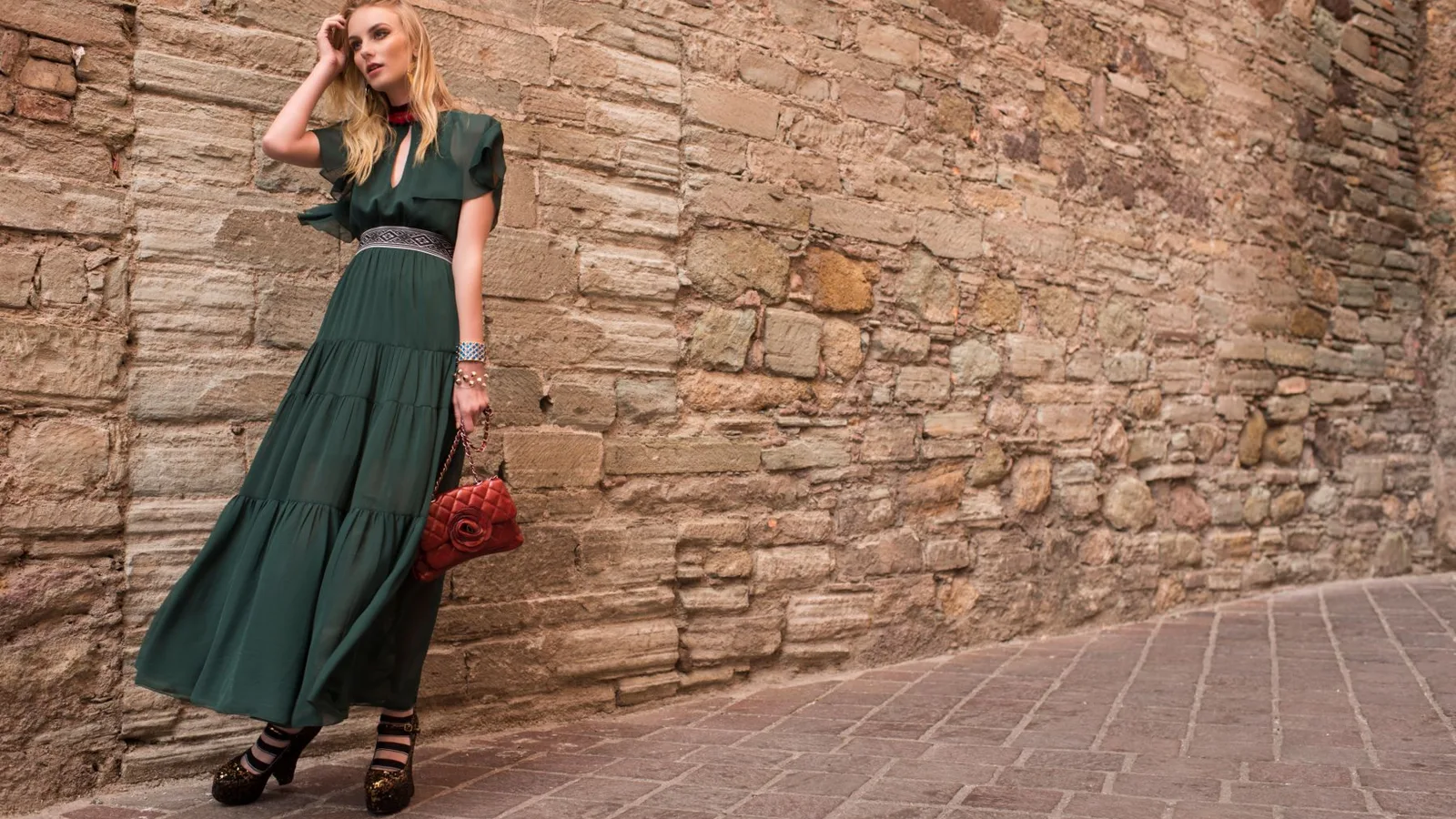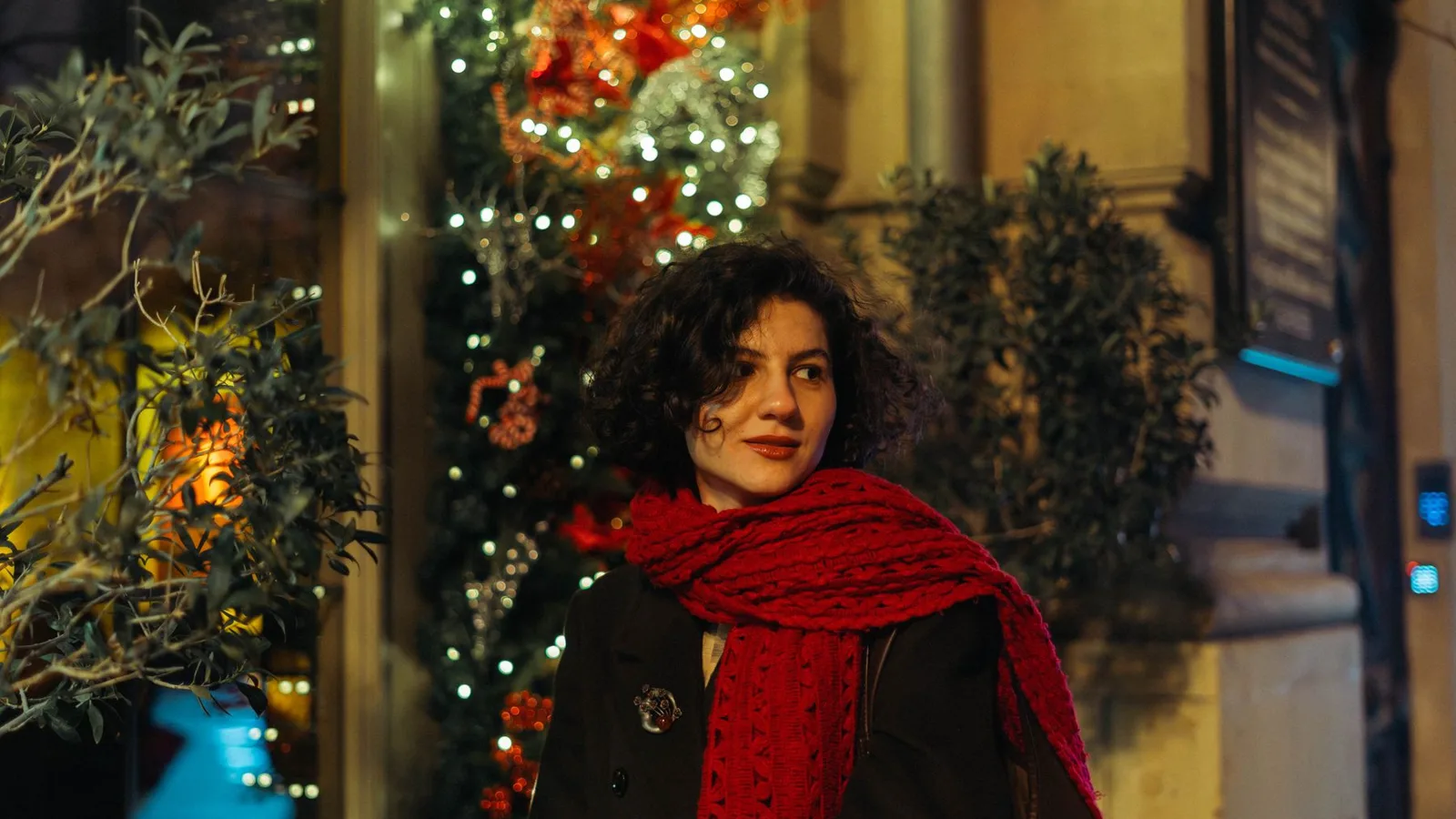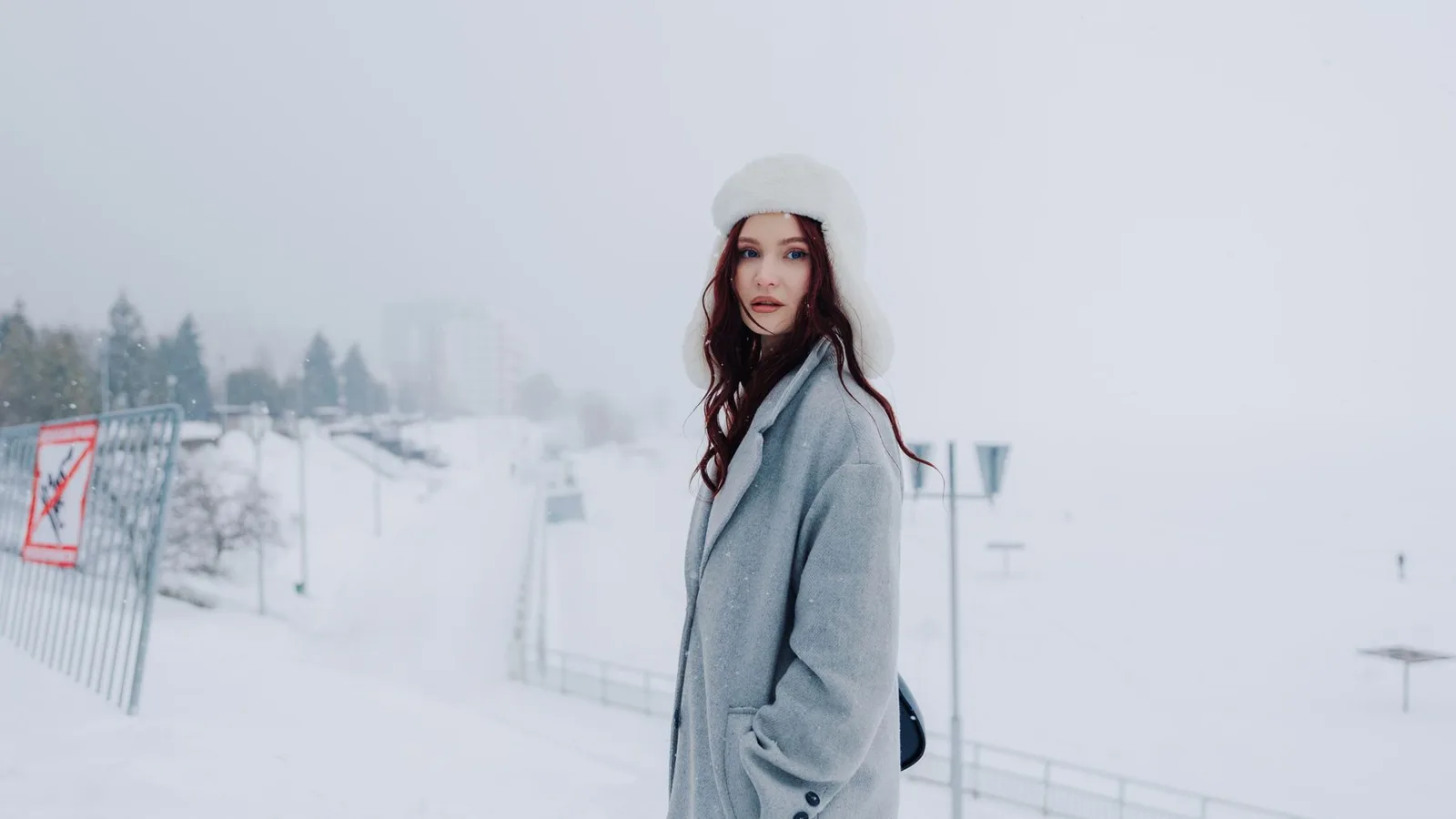
A winter wedding asks for something other seasons do not: a guest outfit that looks celebratory indoors and still works for the walk from the car park, a photo on the church steps, or a ceremony in an unheated barn. The dress code is the same as at any other time of year. What changes is the fabric, the layers, and the order in which you take things off.
This guide covers how to read the invitation, the fabrics and colors that suit the season, three outfit formulas, the shoe and coat plan, and what to leave in the wardrobe. It works whether your winter is December in the northern hemisphere or a cold snap in July in the southern one. If you are earlier in the year, the fall wedding guest guide covers the shoulder season, and the three dress codes guide explains the basic code vocabulary.
Start with the dress code, then add the weather
The invitation sets the formality. Winter changes how you meet it.
- Black tie or formal: a floor-length gown or an elegant tailored jumpsuit. In winter, choose velvet, heavy satin, crepe, or a long-sleeved column dress, and add a wrap or a proper coat.
- Cocktail: a midi or knee-length dress, or a dressy separates set. Winter cocktail is the easiest code to dress warmly for, because wool crepe, velvet, and jacquard are all normal here.
- Semi-formal or “dressy casual”: a knit dress with a tailored coat, or a silk blouse with a satin skirt and a blazer.
- Festive or “holiday chic”: the invitation is giving you permission for sparkle, deep red, and metallics. Take it, within reason.
If the invitation says nothing about dress code, read the venue and the time. An evening ceremony in a hotel ballroom leans formal. A morning church service followed by a lunch leans polished and a little more conservative.
Fabrics that work in winter
Fabric does more to make a winter outfit look right than almost anything else. A summer fabric in a dark color still looks like a summer outfit.
- Velvet: the classic. It reads as dressy, holds heat, and looks rich in candlelight. Choose a dress or a blazer, rarely both at once.
- Satin and silk-blend: best as a slip or bias-cut skirt, with a knit or tailored layer on top.
- Wool crepe and crepe: structured, elegant, and warm without bulk. This is the safest choice for a church ceremony.
- Jacquard and brocade: pattern with texture, good for a winter cocktail code.
- Fine knit: a merino or cashmere-blend knit dress or top, worn with a satin skirt, looks relaxed but polished.
Skip thin chiffon with no lining, sheer layers on their own, and anything that clings to tights. Static and cold are both unpleasant at a wedding that lasts six hours.
Colors: deep, rich, and warm in the cold
Winter light is flat and low, and deeper colors look better in it. The color harmony guide explains why a saturated color paired with a quiet neutral rarely goes wrong, and this is the season to use that rule.
- Emerald, sapphire, and ruby: the jewel tones. Strong, flattering, and photogenic.
- Burgundy, plum, and wine: warmer and a little softer. Burgundy with black or navy is a very dependable combination.
- Forest green and deep teal: a good alternative to black, with more life in it.
- Navy, charcoal, and chocolate: the serious neutrals. They suit evening and formal codes well.
- Silver, pewter, and icy blue: winter pastels. They work when the fabric has weight, like satin or crepe.
White, ivory, and champagne belong to the bride. If you are unsure whether a very pale shade could read as white in photographs, choose another color.
A long-sleeved velvet or crepe midi dress in emerald or burgundy, thermal tights, block-heel pumps or a heeled ankle boot in black, a structured wool coat in black or camel, and a small gold clutch. Add drop earrings and leave the necklace off if the neckline is detailed.
A floor-length column gown in deep navy or wine, a faux-fur or wool wrap, satin heels with a stable heel, and drop earrings. If the venue is cold, carry a thin base layer in a matching tone to wear under the gown.
A satin midi skirt in forest green or plum, a fitted fine-knit top in black or cream, a tailored blazer or long cardigan on top, tall leather boots under the skirt, and a velvet or leather bag. This is the strongest option if you want to wear the outfit again after the wedding.
Church, venue, or outdoors: the setting changes the plan
A church or chapel ceremony is often cold and sometimes conservative. Cover your shoulders for the service, which a blazer, wrap, or sleeved dress handles. Keep the neckline and hem moderate, and wear a coat you can take off in the pew without fuss.
A hotel or venue reception is usually warm inside. Dress for the heated room, with the coat reserved for arrivals and photos. A dress with sleeves and a light wrap is more comfortable than a heavy outfit, because you will be in it for hours.
An outdoor ceremony in cold weather needs the most planning. Choose longer sleeves, thermal tights or a base layer, closed shoes with grip, and a coat that you do not mind wearing in the photographs. Gloves and a hat are fine at the ceremony, and a small hat or fascinator can double as warmth.
A barn or tent wedding is often cold at floor level. Wear lined boots or warm socks to the venue, and change into dress shoes inside if you want to. Choose a longer hem so cold air is not an issue.
Shoes, tights, and the floor problem
The shoe decision is the one most guests get wrong in winter.
- Block-heel pumps or heeled ankle boots are the reliable choice. A suede or leather boot in black or deep brown can look as formal as a pump with the right dress.
- Thermal or fleece-lined tights under a dress are invisible at a distance, and they make a large difference to comfort.
- A polished flat is a good choice for an outdoor venue with gravel, grass, or snow.
- Stilettos and open sandals are risky. They sink into soft ground, slip on wet stone, and leave your feet cold.
If you want to wear a thin heel indoors, carry it in a bag and wear boots to the venue.
Worked example: a December afternoon wedding
Take a 2 pm church ceremony followed by a reception at a country hotel, with a semi-formal code. Here is one outfit built for it:
- Dress: a long-sleeved wool crepe midi in deep burgundy.
- Tights: thermal tights in black.
- Shoes: black block-heel pumps, with a pair of flats in the bag for the dance floor.
- Coat: a long black wool coat, worn for the arrival and the photographs.
- Jewelry: gold drop earrings, nothing else.
- Bag: a small black leather clutch.
- Layer: a thin black wrap for the church, in case it is cold.
The burgundy brings the festive color, the black pieces keep it grounded, and the coat does the warmth. Nothing in it is hard to wear for eight hours.
What to leave in the wardrobe
- White, ivory, and anything that photographs as white.
- Sheer layers with no lining, which feel colder than they look.
- Very thin stilettos if there is any outdoor ground.
- A tiny bag with no room for gloves, a phone, and lip balm.
- A heavy coat that does not suit the outfit. Choose the coat first, then build the dress around it.
- Wearing an outfit you have not sat in. Sit down in it in front of a mirror before the day.
A quick checklist
- Dress code read, and the venue and time checked
- A winter-weight fabric, in a deep color
- Thermal tights or a base layer
- Closed shoes with grip
- A coat or wrap you like in photographs
- A small bag with room for gloves and lip balm
One last check before you leave
The easiest way to catch a problem is a full-length photo with the coat on and the coat off, since you will be seen both ways. Look for a clash between coat and dress color, a hemline that disappears under a long coat, or a shoe that looks too casual. Aurea runs that check in about thirty seconds, scoring color harmony and occasion match and suggesting one change if something is off, which is handy when you are deciding between two finalists the night before.
Questions, answered
What colors should I wear to a winter wedding as a guest?
Deep jewel tones such as emerald, sapphire, burgundy, and plum are the reliable choice, along with chocolate, navy, and black for evening. Soft icy shades like dusty blue or silver-grey also suit winter, as long as the fabric is substantial. Avoid white, ivory, and anything close to the bride's likely color.
Can I wear black to a winter wedding?
Yes, particularly for an evening reception or a black tie invitation. Add one element with warmth or shine, such as a gold earring, a velvet or satin texture, or a jewel-toned wrap, so the outfit reads as celebratory rather than somber.
How do I stay warm in a dress at an outdoor winter ceremony?
Wear thermal or fleece-lined tights or a thin base layer under a long-sleeved or sleeved dress, and carry a wrap or coat you can put on straight after the vows. Outdoor ceremonies are usually short, so the real risk is the waiting, the photos, and the walk between venues.
What shoes work for a winter wedding?
Closed shoes such as a block-heel pump, a heeled ankle boot in leather or suede, or a polished flat. Snow, wet gravel, and cold floors punish thin stilettos and open sandals, and a closed shoe also lets you wear warmer hosiery.
What do men wear to a winter wedding?
A suit in a heavier wool in navy, charcoal, or deep green, a tie or bow tie in a rich color, and leather shoes with a grippy sole. A dark overcoat is part of the outfit, not an afterthought, and a knit waistcoat under the jacket adds warmth without bulk.