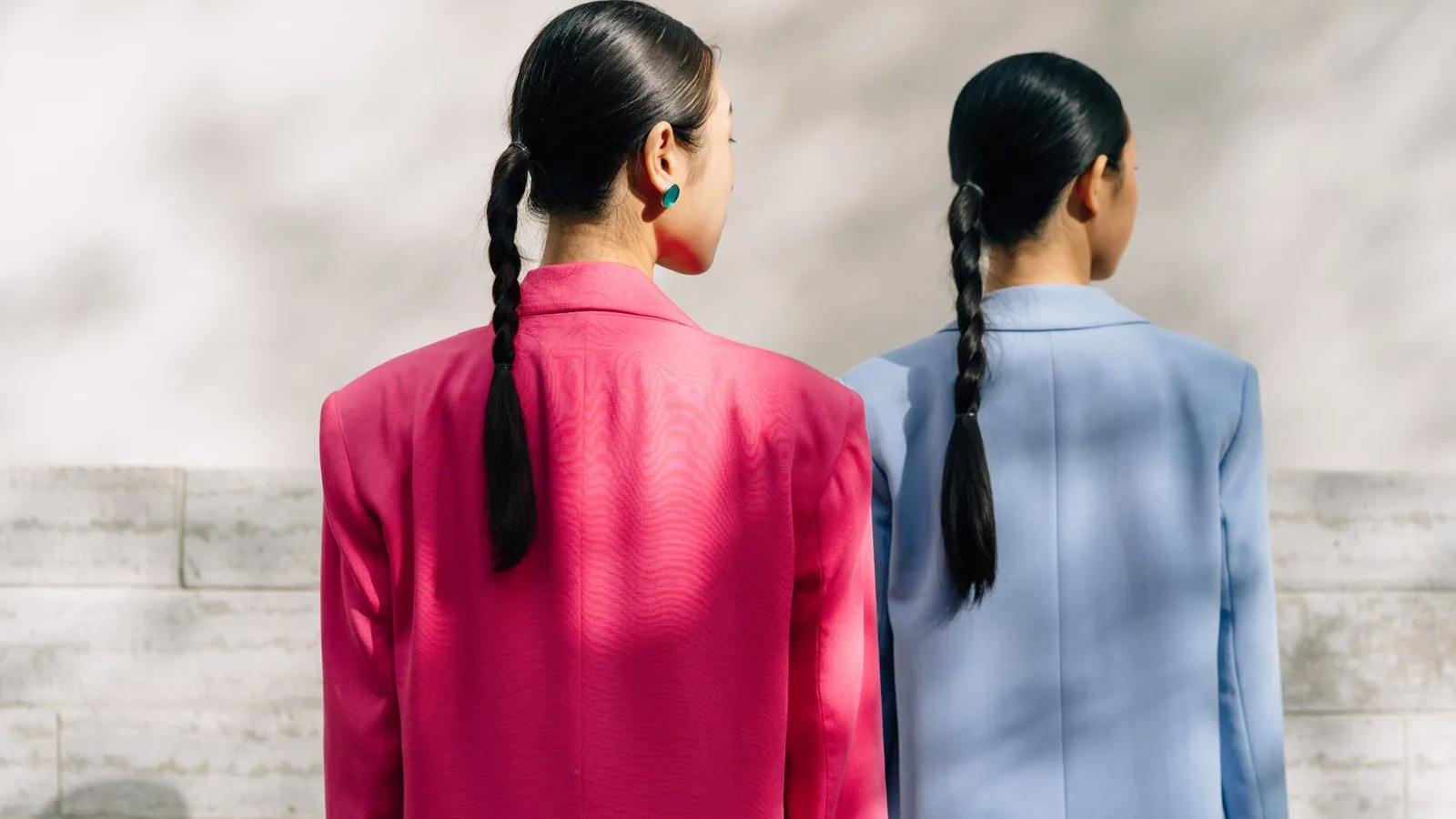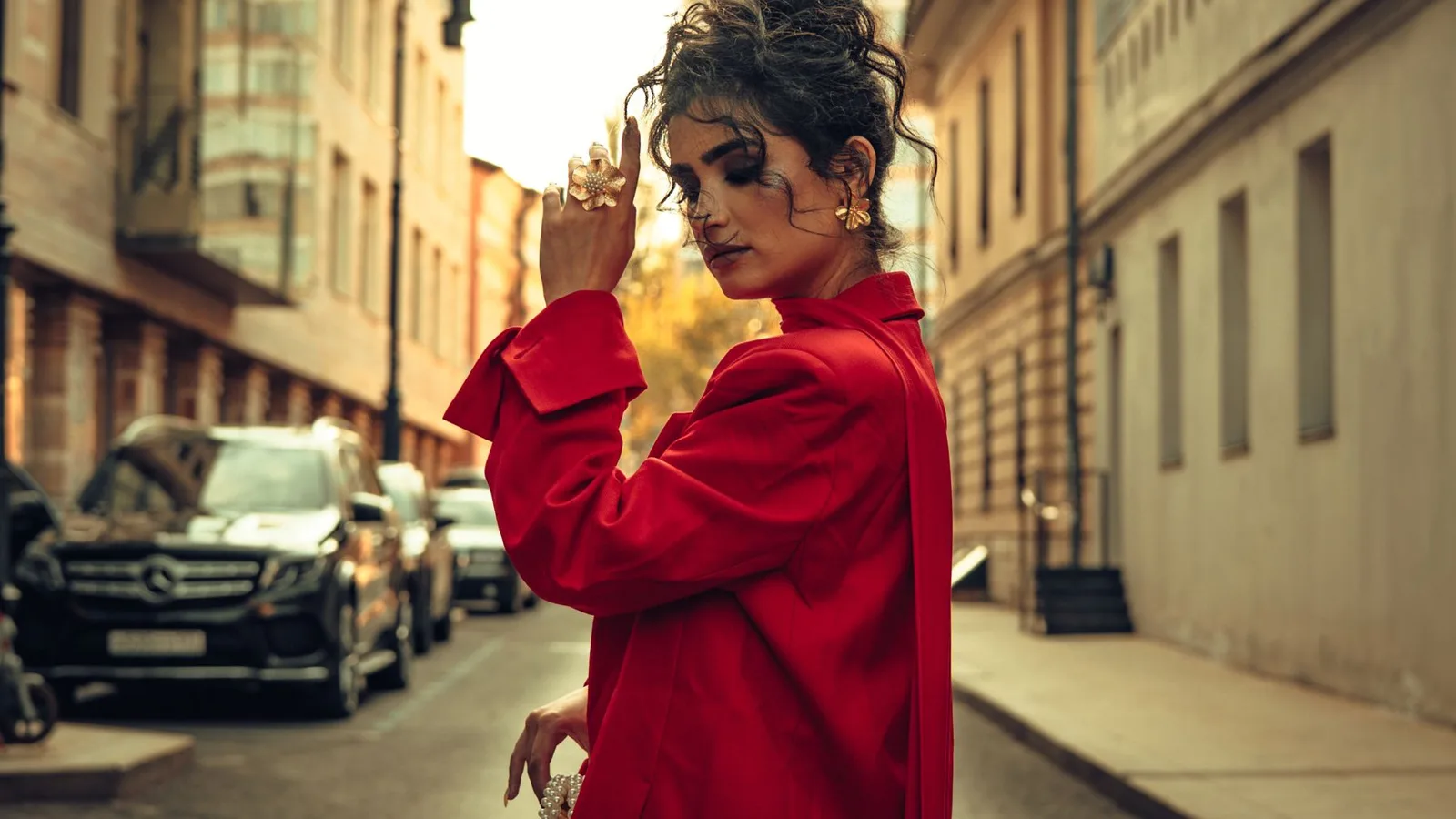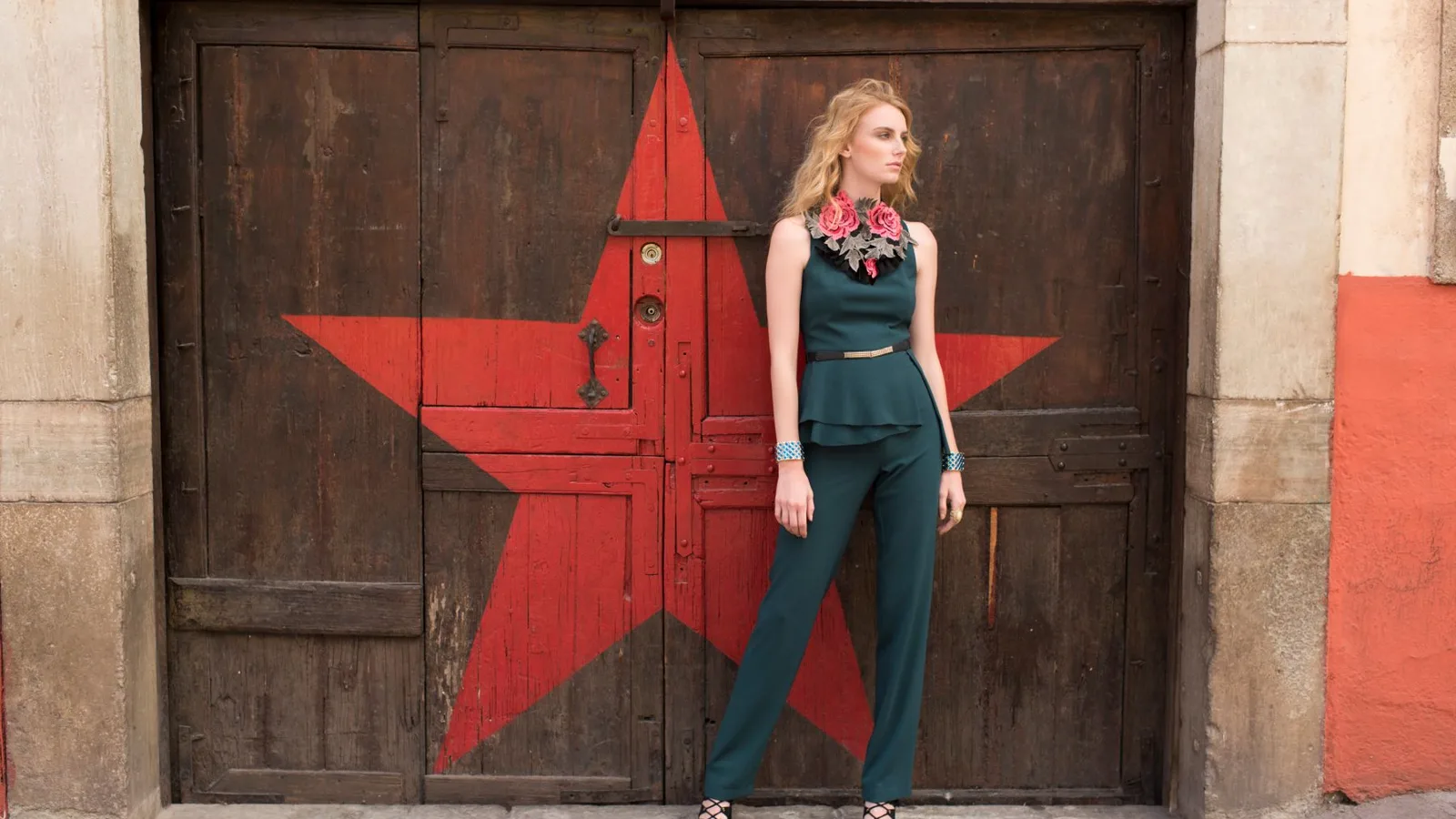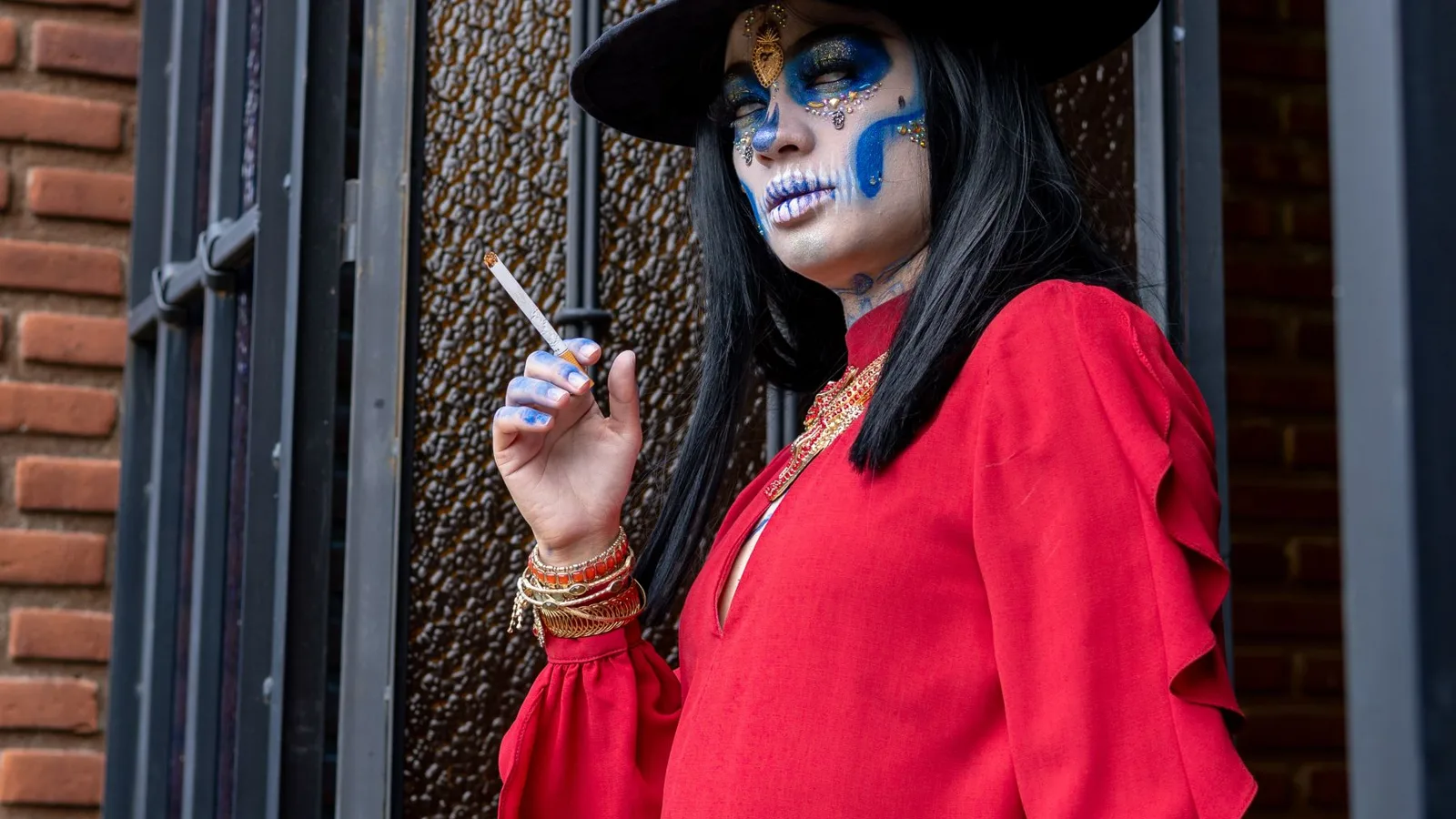
Every Halloween invitation eventually runs into the same unanswered question: does “Halloween party” mean an actual costume, or does it mean something closer to festive and dressed up. Unlike a wedding or a job interview, there is no shared dress code vocabulary for this one, which is exactly why the same three words on an invite can mean a full character costume to one guest and a black dress with a dramatic red lip to another. Neither guest is wrong. But only one of those two readings works at most of the adult Halloween parties actually happening this year, the dinner, the bar crawl, the low-key apartment gathering, the ones where “costume optional” quietly means “costume, please don’t.”
Why dressed up beats costumed at most adult parties
Halloween participation is real and it is not shrinking. In the National Retail Federation’s annual Halloween survey, 51% of consumers said they planned to dress up in costume for the holiday, and 71% said they planned to buy a costume at all, for themselves, a child, or a pet. That is a lot of costumes moving through a lot of stores, but it also means roughly half of the people at any given adult Halloween gathering are not in costume at all, which is exactly the gap a “dressed up, not costumed” outfit is built to fill.
Adult Halloween dress-up itself has a real history behind the modern version of this question. New York’s Village Halloween Parade started in 1974 as a small, local procession of puppets organized by Greenwich Village artist Ralph Lee, with about 200 participants by its second year. It grew over the following decades into the world’s largest Halloween parade, and as it grew, the costumes on display shifted from something mostly built for children into elaborate, adult-driven, often deliberately theatrical looks. That is the same arc a lot of adult Halloween culture followed more broadly: what started as a children’s holiday adopted a distinctly adult, dress-up register alongside it, without ever fully replacing the option to just look considered rather than costumed.
Start with an outfit that would work at any normal evening event, then add exactly one or two Halloween-coded details: a color, a texture, or a single accessory. The base outfit does the "put together" work. The one added detail does the "yes, I know what night it is" work. Neither element should have to do both jobs at once.
Reading the invitation before you decide
“Costumes required” or a named theme means bring an actual costume; there is no dressed-up alternative that satisfies that specific ask. “Costumes encouraged” or “dress to impress” is genuinely open to either reading, and a dressed-up outfit with one strong Halloween detail lands comfortably inside it. A plain “Halloween party” with no other language, the single most common and most ambiguous version, is where most guests default to dressed up rather than costumed, especially once the venue is a bar, a restaurant, or a friend’s apartment rather than a dedicated costume event. The same read-the-actual-wording habit that decodes a smart casual dinner invitation applies here: the words on the invitation matter more than the general vibe of the holiday.
Four formulas that read as dressed up, not costumed
A black or deep jewel-toned outfit, already your normal going-out clothes, with one piece of real Halloween-adjacent texture added: lace, velvet, or a sheer overlay. A black slip dress under a sheer black lace topper, or a velvet blazer over a simple black top, does this without a single costume element in sight.
A genuinely dressy outfit, the kind you would wear to a cocktail party, finished with a simple decorative mask instead of a full costume. The mask supplies the entire Halloween signal, which means the outfit underneath it can be as polished and non-costumey as any other night out.
A single outfit built entirely around one Halloween-associated color, head to toe orange, all black with one red accent, or a deep purple. The color itself reads as intentional and seasonal without needing a mask, face paint, or a character reference anywhere in the outfit.
A completely normal work or evening outfit, with the Halloween signal shrunk down to one small, removable detail: a black manicure, a bold red or black lip, or one subtle pin or piece of jewelry. This is the formula for a work Halloween party or any setting where a full costume would read as too much.
Worked example: one dress, four parties
Take a simple black midi dress, the kind already living in most closets for any semi-formal occasion. For a dinner party, add a sheer black lace shrug and deep red lipstick: Formula No 1, no further changes needed. For a bar crawl with a costume-encouraged theme, swap the shrug for a simple black eye mask with a few small rhinestones: Formula No 2, and the same dress reads as a full look rather than an afterthought. For a color-themed Halloween gathering, add a statement orange or purple coat over the same black dress and let the coat carry the color: Formula No 3. Choosing one color to carry the whole look, rather than several competing accents, is what keeps this version from tipping into costume territory. For the office party the next morning, strip everything back to the black dress alone with a black manicure as the only nod: Formula No 4. One dress, four distinct Halloween-appropriate outfits, and not one full costume piece among them.
Menswear works the same way. A dark suit with a plain black tie becomes Formula No 1 with the addition of a black velvet bow tie in place of the standard one. The same suit becomes Formula No 2 with a simple black domino mask added over the top. Swap the tie for a deep orange or purple pocket square for Formula No 3. And Formula No 4 is the suit exactly as it already exists, with nothing added at all beyond the date on the calendar doing the explaining.
What to skip
Skip a costume bought specifically for a party where the invitation never actually asked for one; it is the fastest way to end up either alone in costume among dressed-up guests, or overdressed in the opposite direction. Skip stacking more than two Halloween-coded details on one outfit, a mask and face paint and a themed accessory together stops reading as dressed up and starts reading as a half-finished costume, which lands worse than either a full costume or a clean dressed-up look on its own. Skip a costume-adjacent piece that only works in a photo and falls apart the moment you sit down, walk, or eat; a party outfit still has to function as clothing for several hours, not just for one picture at the door.
The one mistake to avoid
The single most common Halloween dress-up mistake is guessing wrong on an ambiguous invitation and having no way to adjust once you arrive. The fix is built into all four formulas above on purpose: a mask can go in a bag and come out only if half the room is in costume, a coat can stay on or come off depending on the room’s actual energy, and a manicure or a lipstick needs no adjusting either way. Building in that flexibility from the start means never being the one guest who is either the only person in a full costume or the only person in nothing Halloween-coded at all.
Checking the final look
Once a formula is chosen and the one accent is added, the check that matters is the same one that matters for any outfit: does the whole look read as one clear, considered idea, or does the added Halloween detail look bolted onto an outfit that was not built to carry it? A mask that fights the formality of the dress underneath it, or a color accent that clashes rather than coordinates with the rest of the look, undercuts the whole point of choosing dressed up over costumed in the first place.
This is exactly the kind of check Aurea is built to run before a party where the outfit has to work for the whole night, not just the walk in the door. Photograph the finished look, and it scores color harmony, fit and proportion, and occasion match in about thirty seconds, then names the one adjustment worth making if the balance is off. It will not decide whether your particular party calls for a mask or a manicure, but it will tell you honestly whether the one you picked is actually working before you leave the house.
Questions, answered
Do I actually have to wear a costume if the invitation just says 'Halloween party'?
No. 'Halloween party' on its own is one of the most ambiguous invitations in the whole dress code calendar, and plenty of adult guests show up in a dressed up, Halloween coded outfit rather than a literal costume. Save the full costume for an invitation that explicitly says 'costumes required' or names a theme.
What counts as 'dressed up' instead of 'in costume' for Halloween?
Dressed up means an otherwise normal, well put together outfit with one or two Halloween coded details, a color, a texture, or a single accessory, layered on top. Costumed means the outfit's whole job is to represent a specific character or thing. The four formulas above are all dressed up, not costumed.
Is an all black outfit too plain for a Halloween party?
Not if it is doing something specific rather than just being the default work-week black. Add one texture, a lace or velvet piece, or one accessory with real presence, a dramatic earring or a bold lip, and all black reads as a deliberate Halloween choice rather than a fallback.
What should I actually wear to an office or work Halloween party?
Keep the same one-accent logic as the other formulas but turn the volume down further: a normal work outfit plus a single small nod, a witchy black manicure, cat eye makeup, or a subtle pin, rather than anything with a mask, face paint, or a full character reference.