Diwali 2026 falls on November 8, the main Lakshmi Puja day at the center of a five-day festival that runs from Dhanteras through Bhai Dooj. If you have been invited to a celebration and you are not sure what “Diwali party attire” actually means for you specifically, whether you are Indian or not, a man or a woman, invited to a full dinner or a casual open house, the question is more answerable than it looks. Diwali has real, specific style conventions, and once you know them, building an outfit that reads as festive and respectful takes less effort than guessing.
What the festival is actually celebrating, and why it matters for your outfit
Diwali, the Hindu festival of lights, marks the spiritual victory of light over darkness and good over ignorance, most commonly tied to the story of Rama’s return to his kingdom. That specific framing, light over darkness, is where the most repeated piece of Diwali style advice actually comes from: several etiquette writers steer guests away from all-black outfits for exactly this reason, and toward bright, jewel-toned color instead. It is not a hard rule the way an all-white dress code is at some weddings, but it explains why a Diwali party reads differently than almost any other evening invite you will get this year. The point of the clothing is to visually match the point of the holiday.
The color question, settled first
Lean into color before you think about silhouette. Red and gold are the most repeated combination across Diwali style guides, with red read as prosperity and gold as wealth, but royal blue, emerald, deep fuchsia, and burnished orange all show up constantly too. The unifying idea is saturation: a muted, quiet palette reads as underdressed at a party built around light and celebration, even if the cut and formality of the outfit is otherwise correct.
Pick one saturated jewel tone, red, gold, emerald, royal blue, or fuchsia, and build the outfit around it rather than splitting attention across several. If you want a second color, pair it as a metallic accent, gold jewelry, a gold-threaded dupatta, or gold accessories, rather than a second competing jewel tone.
If you are not Indian: respectful, not a costume
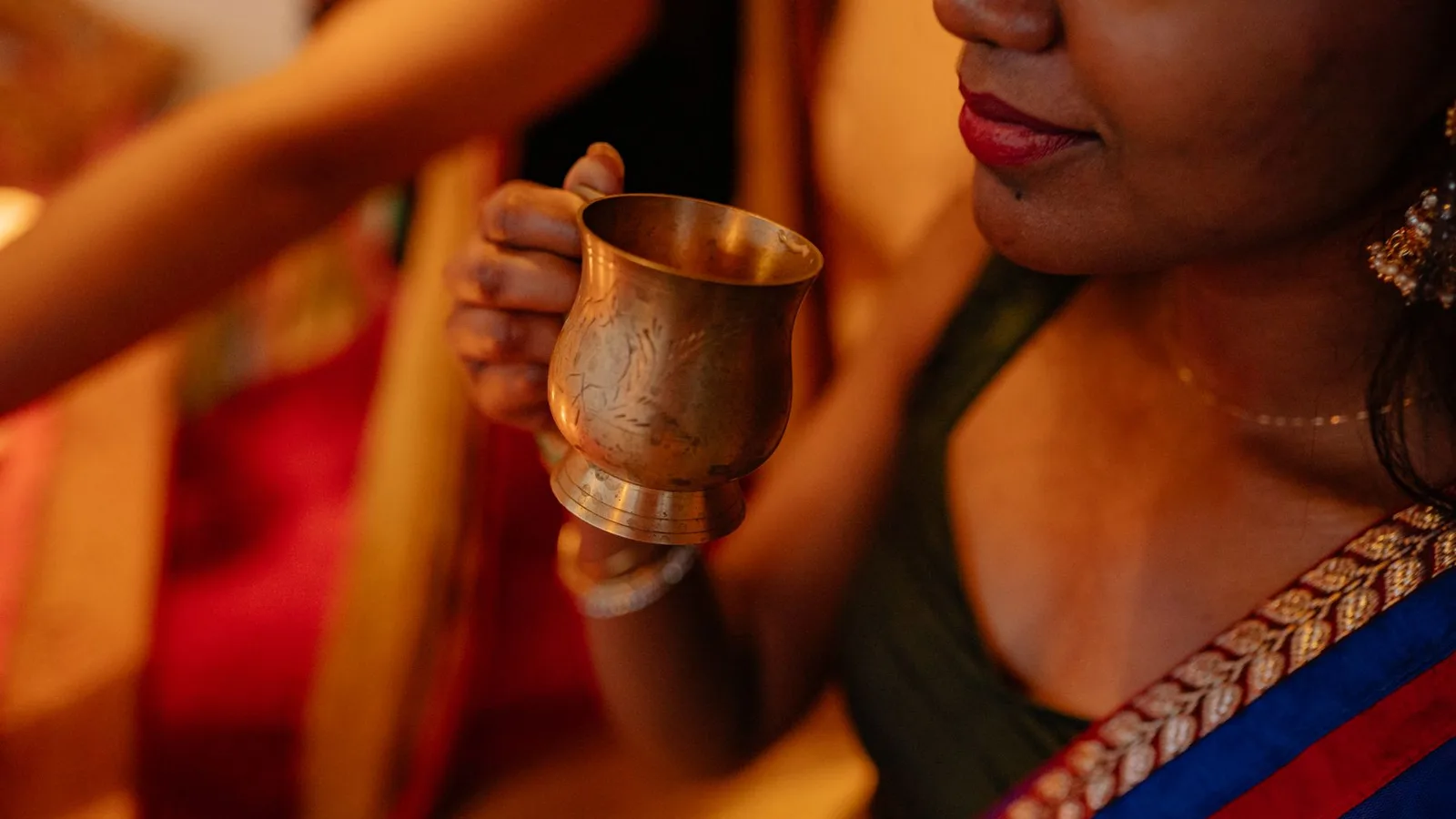
This is the question that comes up most for first-time guests, whether the invitation came from a coworker, a neighbor, or a partner’s family: is it okay to wear Indian clothing if you are not Indian yourself? The consistent answer across South Asian style writers is yes, with one caveat. Wearing a saree, a salwar kameez, or a kurta to a Diwali party you were genuinely invited to is widely described as a gesture of respect rather than appropriation, and most hosts are glad to see a guest make the effort. The caveat is context: this reads as respectful at an actual Diwali celebration you were invited to, with the host’s blessing implicit in the invitation itself, not as a costume pulled out for an unrelated party.
You do not have to wear traditional dress to get this right, either. A jewel-toned Western dress, a bold-colored button-down, or a well-cut top in red or gold hits the same color brief without requiring you to own or borrow anything unfamiliar. If you are torn between the two options, or unsure how dressed-up the specific event is, asking the host directly is a completely normal question to ask, and it is almost always better received than guessing and getting it visibly wrong.
Three outfit formulas, by invite type
The exact same color brief, saturated jewel tone plus gold accents, stretches across three very different formality levels depending on what kind of Diwali gathering you were actually invited to.
A bright kurta or a jewel-toned top worn with dark jeans or tailored trousers, finished with gold jewelry or a gold clutch. Comfortable enough for an open house with kids running around, colorful enough to read as dressed for the occasion rather than an ordinary weeknight.
A saree, a lehenga, or a well-cut jewel-toned dress, paired with statement gold jewelry and heels or embellished flats. This is the formula to reach for when the invitation reads closer to a cocktail dress code than a backyard gathering.
A kurta pajama or a sherwanis-style jacket in a jewel tone, or, for a Western alternative, a dark suit with a gold pocket square and a deep red or royal blue tie. The same light-over-color logic applies: a plain black suit with no color accent reads as underdressed here in a way it would not at most other dinners.
The small etiquette details that are really about clothing
A few Diwali etiquette points are really outfit decisions in disguise. If the evening includes a prayer ceremony, an aarti or a puja, plan to remove your shoes before entering that room, which means choosing footwear you can slip off easily rather than anything with a long lace-up process. Dress a little more modestly for that specific part of the evening, covered shoulders and a longer hemline read as more appropriate for a religious moment, and you can let the outfit open back up, literally and stylistically, once the celebration part of the night begins. None of this requires a separate outfit, just a layer or a wrap you can add and remove as the evening moves between its two modes.
What to skip
Skip an all-black outfit if you have another option in the closet, since it is the one choice most likely to visually clash with a festival built around light and color, even though no one will say anything if you wear it. Skip treating Indian clothing as a costume rather than an outfit, sourced the same way you would source anything else, well-fitted and chosen with care, not reduced to a single stereotype piece. Skip showing up underdressed relative to the invitation’s own tone: a casual open house and a formal dinner both fall under “Diwali party,” and reading which one you were actually invited to matters more here than at a smart casual dinner, where the dress code question is usually more forgiving.
Checking the final look
A jewel-toned outfit is a bigger color commitment than most weeknight dressing, and color is exactly where a mirror in your own bedroom and a mirror at the party tend to disagree. This is the specific check Aurea is built to run: photograph the finished outfit before you leave, and it scores color harmony, fit, and occasion match in about thirty seconds, then names the one adjustment worth making if the jewel tone you picked is not quite landing yet. For deeper reasoning on why certain color pairings read as intentional rather than accidental, the color harmony rules stylists actually use covers the same principles this outfit is built on.
Questions, answered
Is it disrespectful for a non-Indian guest to wear a saree, kurta, or lehenga to a Diwali party?
Generally no, and it is often welcomed. Several South Asian style and etiquette writers describe wearing traditional pieces as a respectful gesture rather than appropriation, especially when the host's own invitation signals a festive, dressed-up evening. If you are genuinely unsure, asking the host directly is always the safer and more appreciated move than guessing.
What colors should I avoid wearing to a Diwali party?
Most Diwali-specific etiquette guides point away from black, since the festival marks light triumphing over darkness, and point toward red, gold, royal blue, and other jewel tones instead. It is not a universal rule the way all-white is at some other events, so a dark outfit will not actually offend anyone, but leaning into color is the safer and more festive choice.
Do I need to dress differently for the puja or aarti part of the evening versus the party afterward?
Yes, slightly. If your host includes a prayer ceremony, plan to remove your shoes before entering that room and keep your outfit a little more modest for it. Once the ceremony ends and the party itself starts, the more festive, jewel-toned version of your outfit is exactly right.
What is the difference between dressing for a casual Diwali party and a Diwali dinner party?
A casual Diwali party calls for festive color without full formalwear, think a bright kurta or a colorful top rather than head-to-toe sequins. A Diwali dinner party raises the formality closer to a cocktail dress code, where a saree, lehenga, or a more polished Western dress earns its place.